𝗝𝗢𝗜𝗡 𝗢𝗨𝗥 𝗪𝗛𝗔𝗧𝗦𝗔𝗣𝗣 𝗖𝗛𝗔𝗡𝗡𝗘𝗟! 𝗖𝗟𝗜𝗖𝗞 𝗢𝗡 𝗧𝗛𝗘 𝗟𝗜𝗡𝗞: https://whatsapp.com/channel/0029VaN7nmQGOj9na4QhBa12

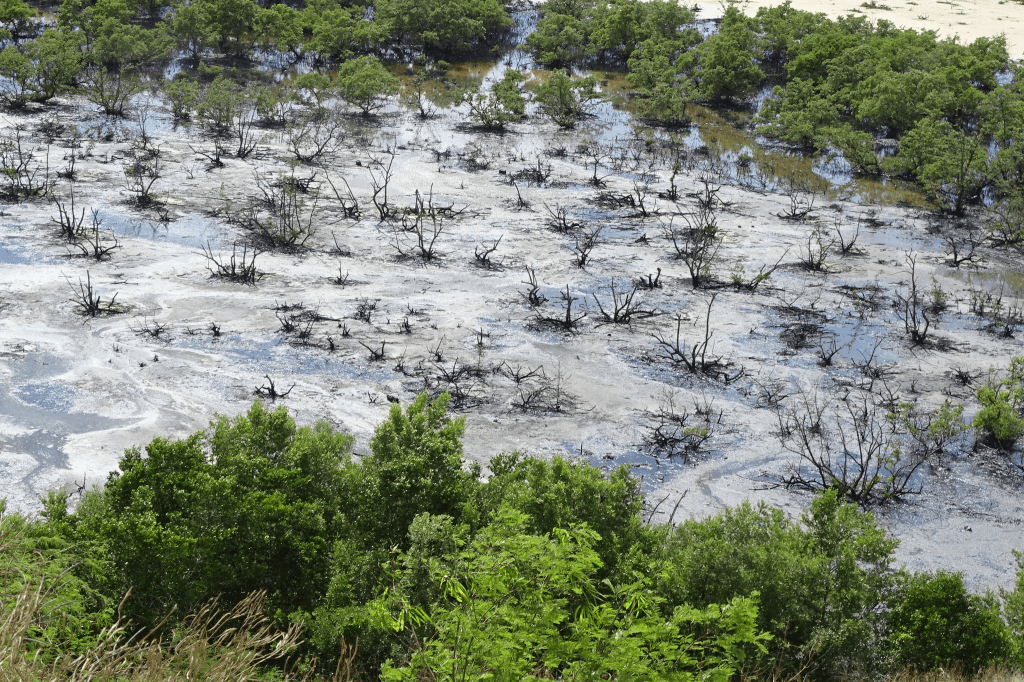
A plan of action put in place about a week ago to control the leakage of contaminants from the Cooks Landfill into the sea has reaped success.

The National Emergency Operations Centre (NEOC), that was partially activated to manage the situation that came to light on February 12, 2026 is reporting that the leakage is under control
and there have not been any further signs of seepage from the area.
Following the incident that was reported to the Pilot Station at the Antigua Port Authority last Thursday and a subsequent meeting on Friday of the National Marine Pollution Committee
which includes several critical agencies, some steps were taken in keeping with the National Marine Pollution Manual.

Booms were placed in the affected area known as Hansons Bay, in the vicinity of Pearns Point, to contain the spread of contaminants and water quality testing was done by the
Department of Analytical Services.
Also, as a safety measure, residents were prohibited from
fishing or engaging in any recreational activities in the area.
The results from the water quality testing are pending and therefore restrictions remain in place.

Among the members of the National Marine Pollution Committee are the National Office of Disaster Services, the Ministries of Health, Tourism, Legal Affairs and Agriculture, Solid Waste, the Department of Environment, the West Indies Oil Company, the Department of Marine Services, the Defence Force, Coast Guard, the Fisheries Division, the Antigua Port
Authority and the Meteorological Office.
Since the incident is now under control, the National Emergency Operations Centre is no longer activated, however monitoring will continue.
In addition, several recommendations have been made to ensure that the situation does not recur and that critical departments such as Solid Waste are provided with the necessary resources to effectively manage waste disposal.





Leave a Reply