
𝗝𝗢𝗜𝗡 𝗢𝗨𝗥 𝗪𝗛𝗔𝗧𝗦𝗔𝗣𝗣 𝗖𝗛𝗔𝗡𝗡𝗘𝗟! 𝗖𝗟𝗜𝗖𝗞 𝗢𝗡 𝗧𝗛𝗘 𝗟𝗜𝗡𝗞: https://whatsapp.com/channel/0029VaN7nmQGOj9na4QhBa12

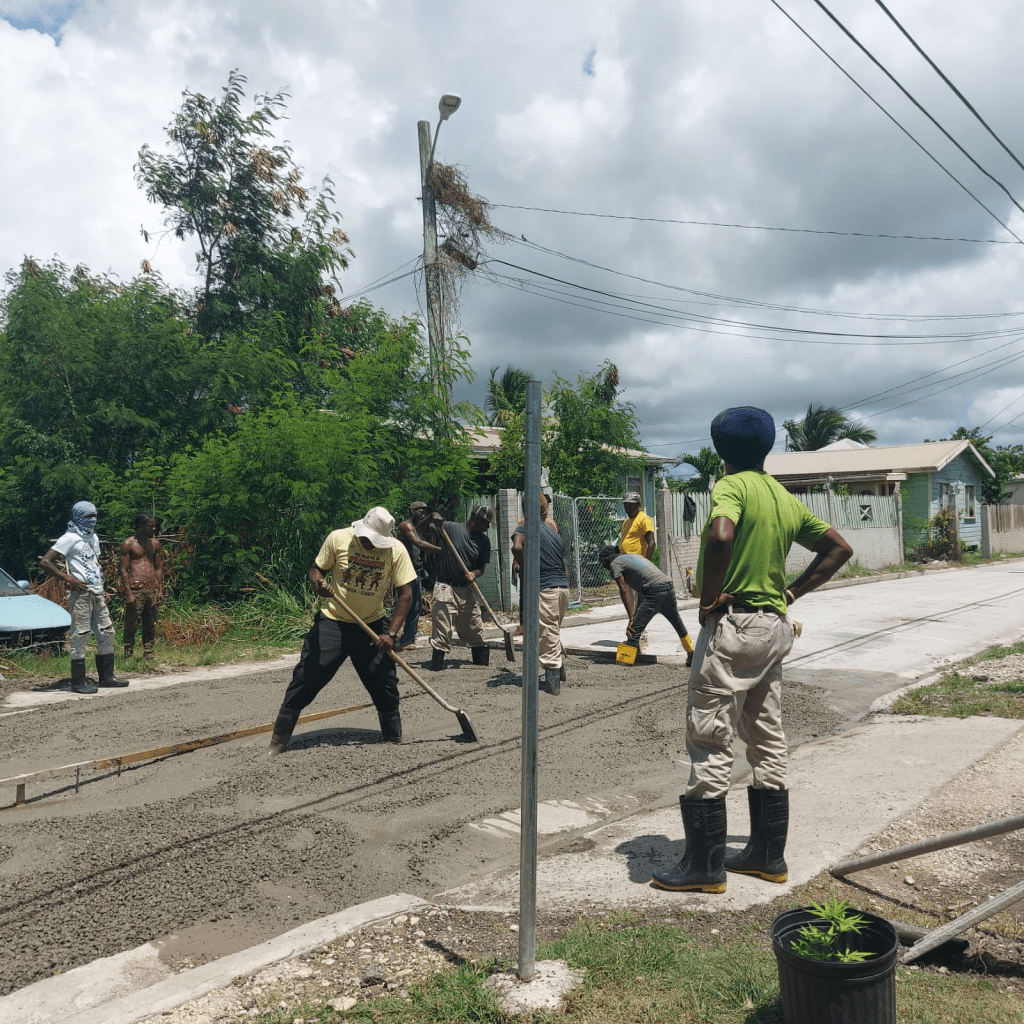
CABINET NOTES: The Management Team at the Ministry of Public Works was invited to the Cabinet to provide an update on its efforts to improve the quality, durability, and cost-effectiveness of Antigua and Barbuda’s road infrastructure through the adoption of innovative and sustainable technologies.
Over the years, the Ministry has observed that traditional methods of road construction have often failed to deliver the desired longevity and quality, resulting in frequent repairs and rising maintenance costs.

In response, the Minister of Public Works and her Executive Team mandated the Engineering Department to explore resilient and affordable alternatives capable of transforming the nation’s road-building practices.
Through this initiative, the Roads Department — in collaboration with Engineer Joseph Prempeh — identified two promising technologies:

- “SILICONPOX” road stabilization technology, designed to strengthen the base and sub-base of road structures; and
- Natural Asphalt Cold Mix (“Asfaltita”), a durable, energy-efficient, cold-applied wearing surface developed by Hermis Corporation of Colombia.
Following engagement with Hermis Corporation, an official delegation comprising the Acting Director of Works, a Senior Engineer, and Eng. Prempeh visited Pereira, Colombia, from October 16–21, 2025, to observe the application and performance of these technologies.
During the technical visit, the delegation inspected several successful project sites utilizing the SILICONPOX soil stabilization method and the Natural Asphalt Cold Mix, confirming their potential suitability for local conditions.

Siliconpox is categorised as a soil stabiliser — it treats clayey or silty soils and transforms their mechanical and functional properties.

- It chemically reacts with the soil structure (via surface tension and macro-structure change) to improve strength, reduce permeability and enhance load bearing capacity.
- It’s presented as an environmentally-friendly option: non-flammable, non-explosive, low ecotoxicity, uses existing soil rather than importing large amounts of aggregate or quarry material.
- its main role is producing a stronger and more durable base/subgrade improves the “foundation” for asphalt, thereby increasing the system’s lifespan, reducing maintenance frequency, and improving resilience (especially in weaker soil contexts).
- Will significantly lengthen the life of asphalt pavements. Typical improvement: 30–50%
- Best-case improvement: Up to 100% (where soil types are very weak before treatment) and works out to be cheaper than the traditional method currently being used.

The Ministry also presented to Hermis Corporation the “Saint John’s Next Level Face Lift” infrastructure concept — a visionary development model proposing the conversion of Tanner Street into a Tourist and Vendors Boulevard, under an EPC+F (Engineering, Procurement, Construction and Financing) framework.

The team sought and was granted Cabinet’s permission to select the Burning Flames Highway as the pilot project site for the introduction of the SILICONPOX road stabilization and Natural Asphalt Cold Mix technologies.

This pilot will allow the Ministry to evaluate the performance, durability, and cost-efficiency of the new method under local environmental and traffic conditions.
Minister Maria Browne told the Cabinet that the launch of the pilot on the Burning Flames Highway represents a major step toward revolutionizing how the Ministry of Works construct and maintains the nation’s roads.

The Ministry will continue to collaborate with Hermis Corporation and relevant local partners to implement the pilot and monitor its outcomes.
Findings from this project will inform broader adoption of these technologies in future national road construction and rehabilitation programmes.







Leave a Reply