
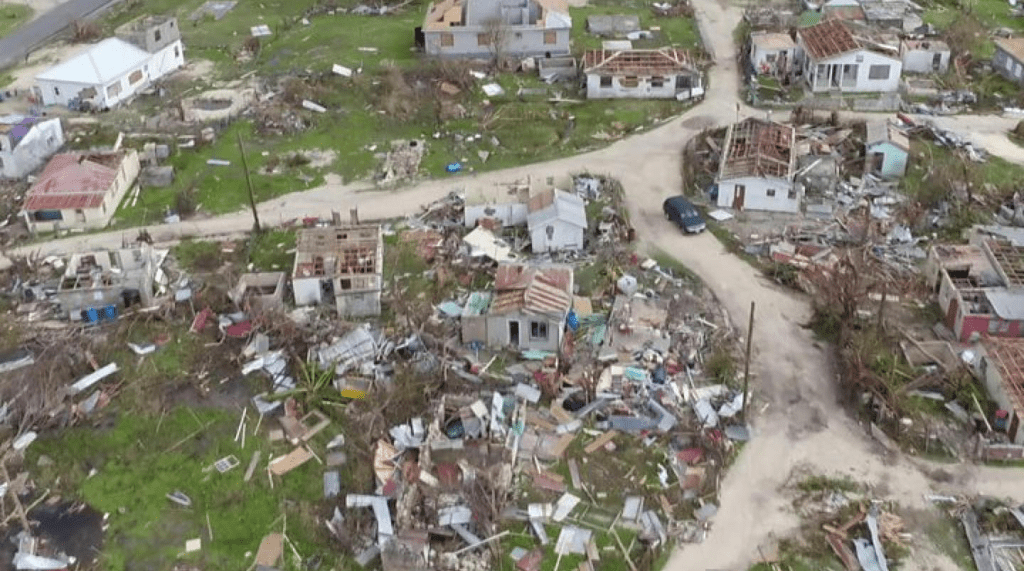
National Office of Disaster Services (NODS): Today marks seven years since Hurricane Irma made landfall. Classified as a category 5 hurricane, Irma remains the most powerful hurricane ever recorded in the Atlantic, with wind speeds exceeding 185 miles per hour (298 kilometers per hour) and accompanied by torrential rainfall.

On September 6, 2017, Hurricane Irma struck Barbuda in the early morning hours. The storm’s eye passed directly over the island, subjecting it to intense eye-wall winds for over three hours.
This was exacerbated by a significant storm surge of 5 to 11 feet, leading to catastrophic flooding and widespread damage across all sectors of the island. In contrast, Antigua experienced only tropical storm-force winds, resulting in minimal impact.

The devastation in Barbuda was profound, with ninety percent of structures either damaged or destroyed. Critical infrastructures, including roads, electricity, communications, and water systems, sustained significant damage.
Tragically, there was one fatality, an infant boy. The estimated recovery cost stood at approximately 600 million Eastern Caribbean dollars.

Given the potential threat from subsequent cyclones, a complete evacuation of residents from Barbuda to Antigua became necessary.
As we reflect on this tragic event, we honour the resilience of the affected communities and recognize the importance of preparedness in the face of future natural disasters.


 safety steps
Leave a comment