
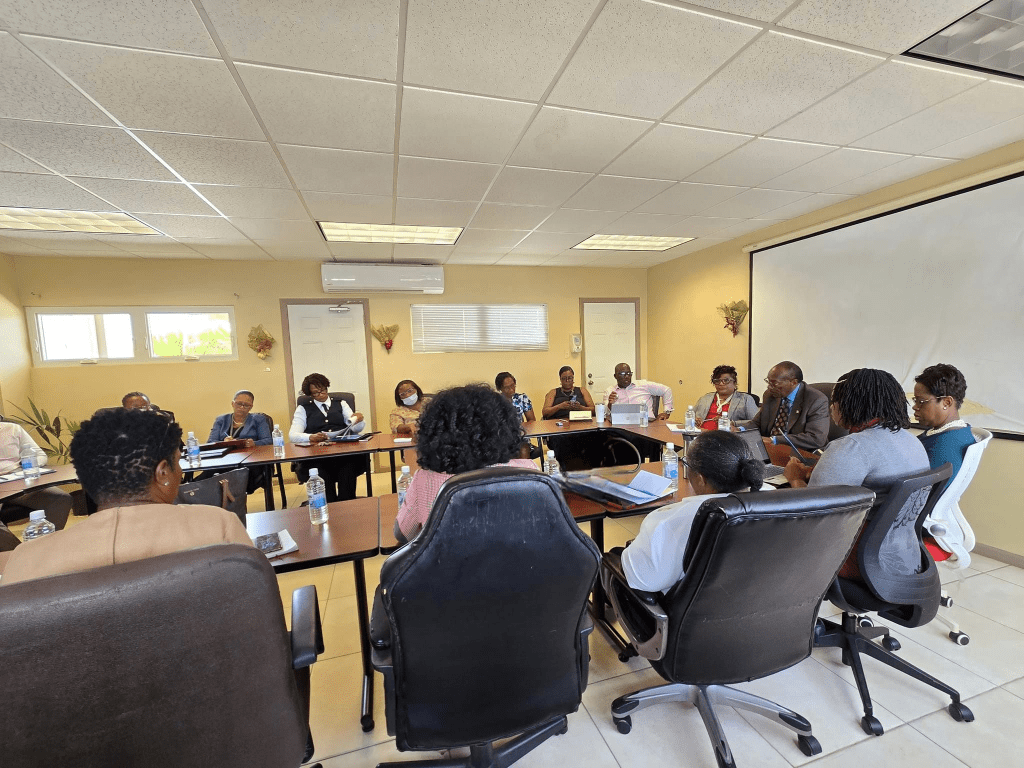
Subsequent to the World Health Organization (WHO) declaring Mpox a public health emergency of international concern on Wednesday 14th August 2024, the Minister of Health, Hon Sir Molwyn Joseph, immediately called an emergency meeting with the Health Disaster Executive of the Ministry of Health, Wellness, Social Transformation and the Environment (MOHWSTE) today (15th August 2024) at the Ministry’s headquarters.

The Health Disaster Executive, which was formed pre-covid, is responsible for overseeing and coordinating the response to health emergencies and disasters in Antigua and Barbuda, and is made up of senior officials within the MOHWSTE.
Led by the Minister of Health, the Chief Medical Officer, Deputy Chief Medical Officer, Permanent Secretaries, Medical Officers of Health, Principal Nursing Officer, Public Health Nurse Epidemiologist and other members of the Health Disaster Executive, engaged stakeholders which included the Ministry of Tourism, Ministry of Civil Aviation, Antigua and Barbuda Port Authority, Antigua and Barbuda Airport Authority, Department of Immigration, Customs and Excise Division, Sir Lester Bird Medical Centre, and the Antigua and Barbuda Emergency Medical Services to apprise them of the recent development.

A decision has been made for a multistakeholder approach to increase surveillance at the ports of entry of Antigua and Barbuda and at health care facilities across the country.
The laboratory of Sir Lester Bird Medical Centre is equipped to conduct diagnostic testing of suspected cases, should the need arise.

Mpox is a disease caused by the monkeypox virus which is similar to the smallpox virus. Persons typically experience a fever, rash, swollen lymph nodes, muscle pain, back pain and/or fatigue.
Anyone experiencing these symptoms should seek attention from their health care provider. Suspected cases of Mpox will be reported to the MOHWSTE’s Epidemiology and Surveillance Unit.

The virus is spread from person to person by direct contact with the rash, bodily fluids (fluid, pus or blood from skin lesions), and scabs. Clothing, sheets, towels and other objects can also be sources of infection.
The virus can also be transmitted from a pregnant mother to her unborn child. Respiratory secretions can be a potential source of infection.

Although there is no specific treatment for Mpox, preventative measures are key to reducing the risk of transmission. The public is advised that frequent handwashing, and routine wet cleaning and disinfecting of surfaces may prevent infection.
Persons are therefore strongly advised to adopt these public health measures to avoid becoming infected with the Mpox virus.




 safety steps
Leave a comment