
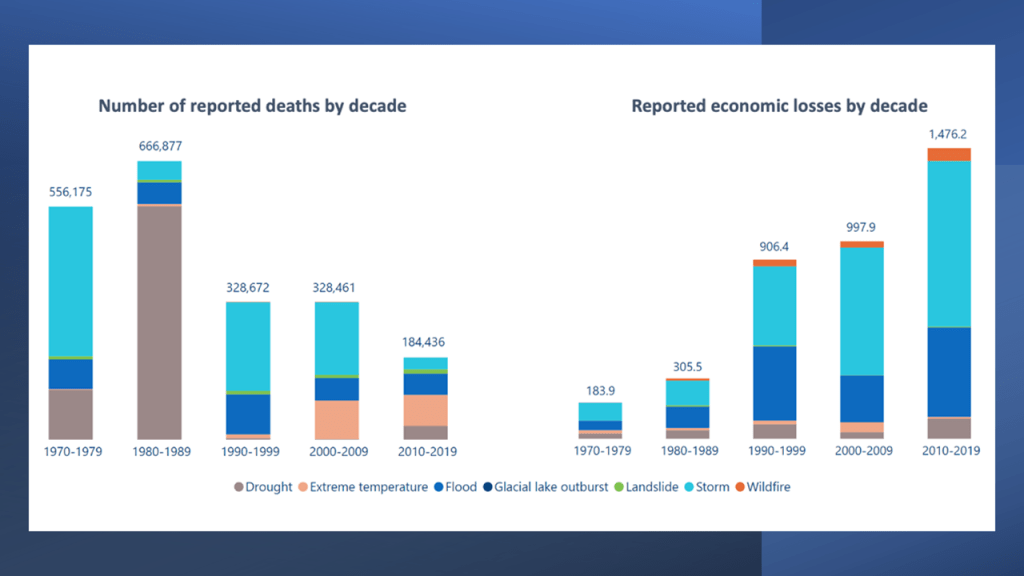
Dale C. S. Destin: Published 22 May, 2023 – Extreme weather events and their impact on human lives and economies have been a growing concern in recent years. The World Meteorological Organization (WMO) has just released updated data on the mortality and economic losses resulting from weather, climate, and water-related hazards.

The figures reveal a staggering number of disasters, escalating economic losses, and the importance of early warnings in saving lives. In this blog post, we delve into the key findings capture by the data and in the WMO press release and explore the significance of early warning systems (EWSs) in mitigating the effects of such disasters.

Between 1970 and 2021, a total of 11,778 reported disasters were caused by extreme weather, climate, and water-related events. Tragically, over two million lives were lost during this period.
Furthermore, the economic losses resulting from these disasters amounted to a staggering US$4.3 trillion and rising. These losses have placed a significant burden on affected countries, with developing nations bearing the brunt of the casualties, accounting for over 90% of reported deaths worldwide.

While the economic losses have seen a sharp rise, the report highlights a positive trend in the reduction of mortality rates over the past 50 years. Thanks to improved EWSs and coordinated disaster management efforts, the human casualty toll has significantly decreased.
This accomplishment is a testament to the power of early warnings in saving lives. Vulnerable communities, which have historically been the most affected, now benefit from timely alerts and effective disaster response measures.





 safety steps
Leave a comment